Identify the product before choosing a response
A fresh coating or floor can release volatile compounds as it dries or cures, but products differ substantially. Read the container label, technical sheet, and installation instructions for ventilation, temperature, re-entry, and cleanup guidance. Do not rely on a generic claim that every new-material odor is harmless or that a particular number of days ensures clearance. The occupant's sensitivity and the product formula both matter.
Map where the smell is strongest and whether it changes when a door opens, the HVAC system runs, or sunlight warms the surface. A room-wide chemical note after installation may differ from an odor concentrated at a closet, floor seam, or container. Keep leftover product sealed and stored as directed, remove waste according to local disposal instructions, and do not pour coating or adhesive into a drain.
Use ventilation only in ways compatible with the product and building. Opening windows may help if outdoor conditions permit and there is no combustion or security concern. Exhaust fans should discharge outdoors; recirculating fans only mix air. If occupants experience headache, breathing difficulty, or significant irritation, leave the space and consult medical or poison-control guidance. A persistent or worsening odor, soft flooring, bubbling finish, or suspected installation defect calls for the installer or product manufacturer to review the specific materials.
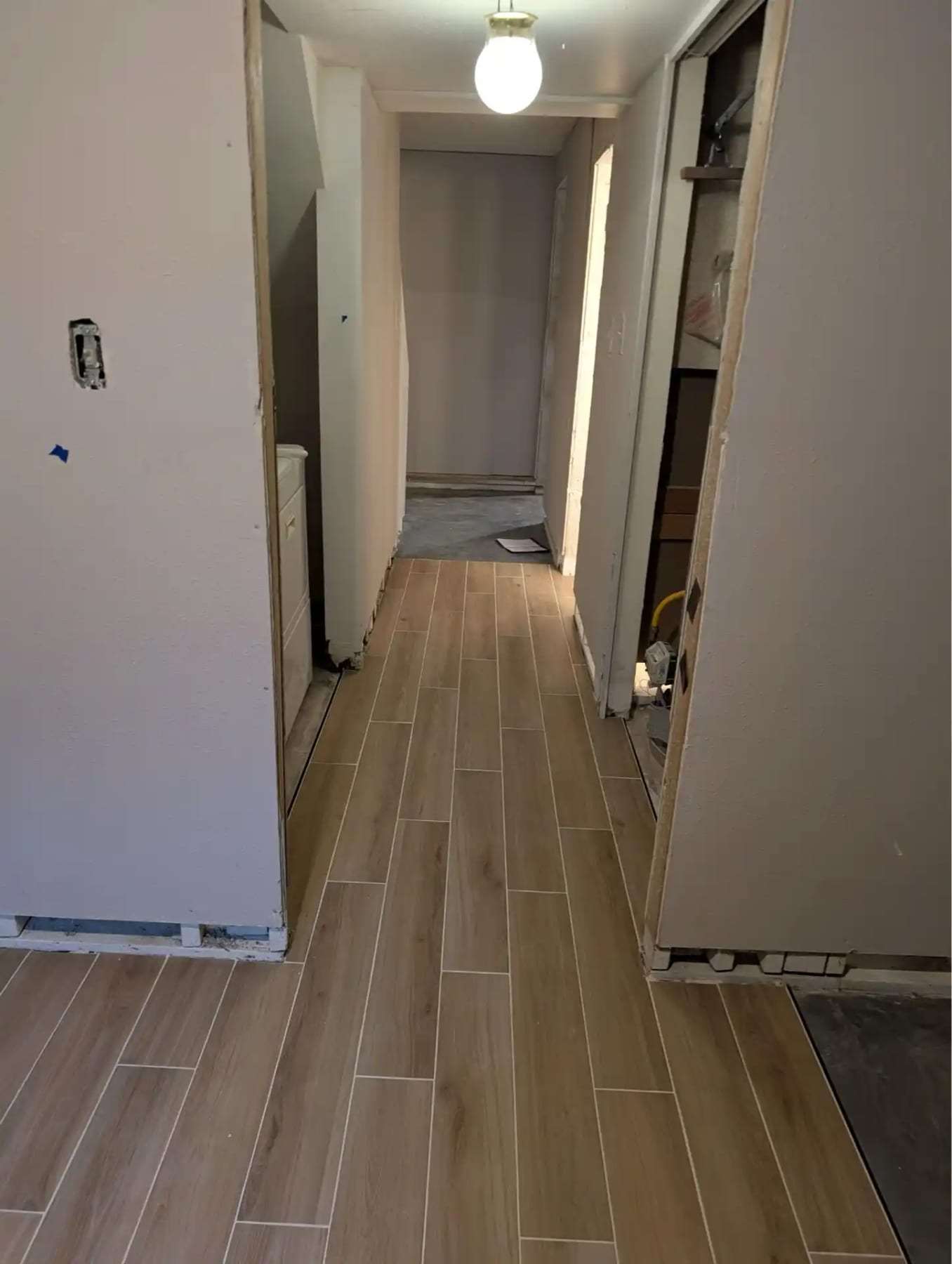
Hallway with new plank flooring installed after repairs. Shown to illustrate the work described; not a job for this site or at any address named here.
Different sources can sound alike
- Observed location
- Broad painted wall or trim
- Possible material
- Primer, paint, or cleanup residue
- Useful document
- Paint label and technical sheet
- Observed location
- Floor seam or perimeter
- Possible material
- Adhesive, underlayment, or flooring
- Useful document
- Installation specification and product sheet
- Observed location
- One stored corner
- Possible material
- Open container, rag, or renovation waste
- Useful document
- Safety data and disposal instructions
- Observed location
- Nearby return grille
- Possible material
- Air movement spreading room odor
- Useful document
- HVAC layout and timing log
A product-specific review
- Write down brand, product name, installation date, and lot or batch details from labels or invoices.
- Check the product instructions for ventilation, temperature, cleaning, and re-entry recommendations.
- Ask whether the installed material, adhesive, underlayment, or finish is the strongest odor source.
- Keep people away from a room if symptoms occur and seek health guidance rather than testing exposure.
- Record whether odor changes with heat, sunlight, HVAC operation, or closed-door conditions.
- Do not add solvent, fragrance, or another coating until the original product and cure requirements are known.
Common questions
Can a fan speed up curing?
Follow the coating or flooring instructions. Airflow, temperature, and humidity may affect cure behavior differently across products.
Should a new floor odor be covered with sealer?
Not without identifying the material and confirming compatibility. An added coating can trap solvent or damage the finish.
General information for Lowry, not a quote or professional advice. In an emergency, call 911.