Use the weather change as a clue, not a diagnosis
A musty smell after rain can be associated with damp cardboard, carpet edges, stored textiles, a wall or floor joint, or a drain that receives little water. Humidity can also make an old odor more noticeable without a new leak. Compare the strongest spot with dry areas and look for visible changes: darkened materials, a water line, dampness at a corner, peeling paint, or condensation on cold pipes. Do not touch a suspected sewage backup or unknown liquid.
Record the timing precisely. Note rainfall, outdoor temperature, basement humidity if a reliable meter is available, sump-pump activity if present, and which rooms changed. A smell that begins near an exterior wall after a storm is different evidence from one that appears only when the furnace fan runs. Move ordinary belongings away from damp surfaces only if it is safe, and do not stack items against a wall where they prevent inspection.
Correcting moisture may require more than airing out a room. Check visible gutters and downspout discharge from the ground, observe whether water is directed away from the foundation, and note grading or pooling without excavating. A persistent wet area, foundation seepage, or recurring mold-like growth needs an informed building assessment. Use protective precautions and avoid disturbing suspicious growth, especially if occupants have respiratory concerns.
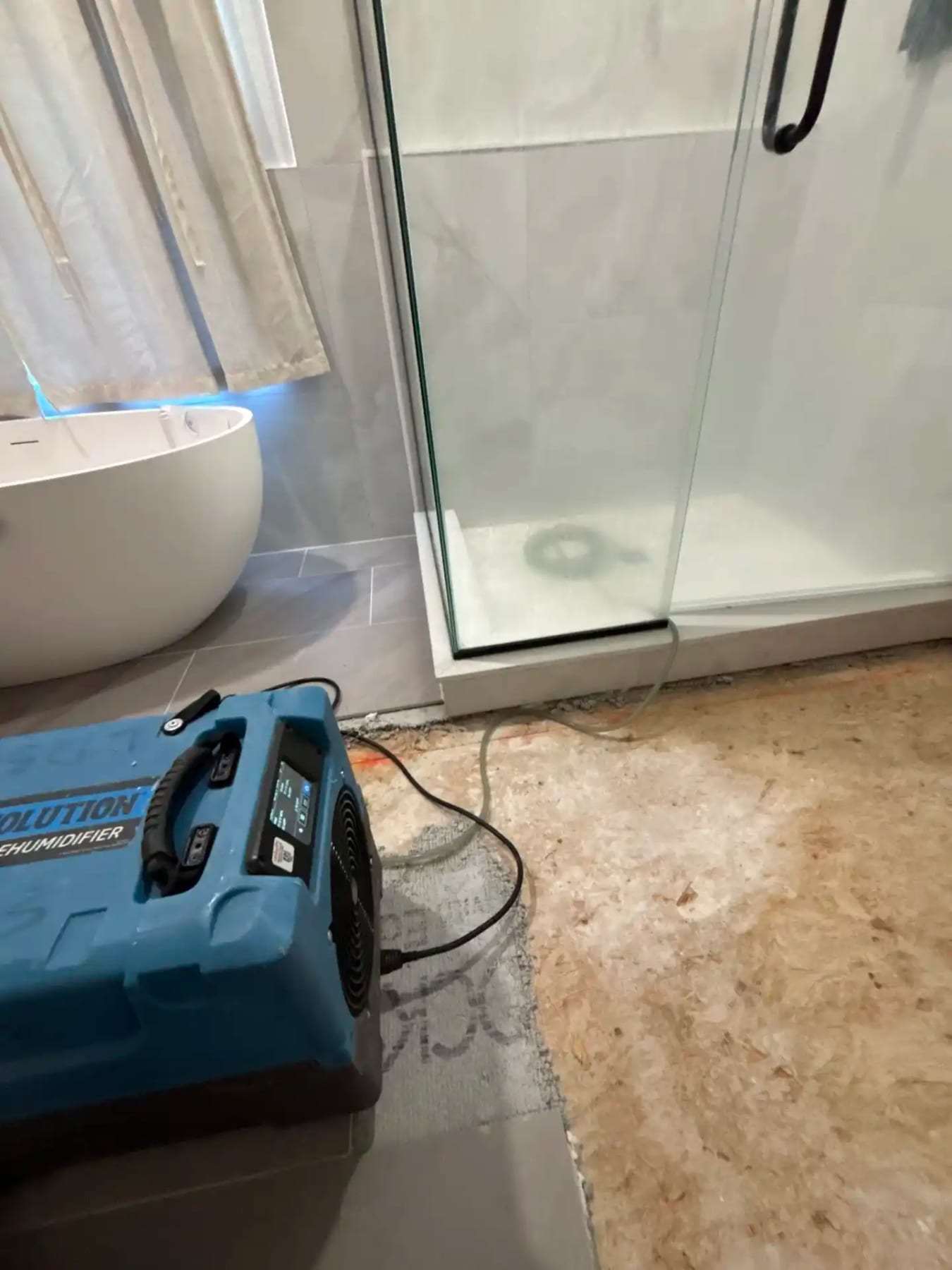
Bathroom with the tile removed to the subfloor and a dehumidifier running. Illustrative image of the process; it does not document a job done for this site.
Make a careful basement record
- Mark the exact corner, floor edge, drain, storage shelf, or mechanical area where the odor is strongest.
- Photograph visible moisture before moving items, and note whether the evidence changes after the weather clears.
- Check stored cardboard and fabric individually; damp contents can smell even when the room structure is dry.
- Observe accessible downspouts and surface pooling from a safe outdoor position after rain.
- Notice whether the odor changes with the HVAC blower, dehumidifier, or a door being opened.
- Keep away from sewage, electrical hazards, standing water near equipment, and materials that may be contaminated.
Possible clues and limits
- Clue
- Odor concentrated in cardboard
- Possible direction
- Stored material may be holding moisture
- What it does not prove
- That the foundation is dry everywhere
- Clue
- Dampness at a floor-wall joint
- Possible direction
- Water entry or condensation deserves review
- What it does not prove
- The exact entry path
- Clue
- Only after HVAC starts
- Possible direction
- Air movement may reveal or carry an odor
- What it does not prove
- That ducts themselves are the source
- Clue
- Drain-centered sulfur note
- Possible direction
- A trap or plumbing condition may contribute
- What it does not prove
- That rain caused the odor
Common questions
Does a dehumidifier fix the cause?
It can reduce indoor humidity but does not repair water entry or remove contaminated material. Track whether the underlying wetting stops.
Can rain make a dry basement smell?
Humidity and air-pressure changes can alter how an existing odor is perceived, but observation alone cannot establish the mechanism. Compare timing and visible conditions.
General information for Lowry, not a quote or professional advice. In an emergency, call 911.