Can cooking odors really be removed?
Yes. Cooking odors settle into fabrics, cabinets, and the air system. Treating those materials and the HVAC removes the residue causing them.
One room or the whole house
Cooking smells that won't leave, a bedroom that never felt fresh, or an odor that's spread through the whole house: the right treatment depends on how far the odor has traveled, and this guide helps you tell.
A Lowry guide to home odors. Ask whether ozone or synthetic scent will be used before any treatment.
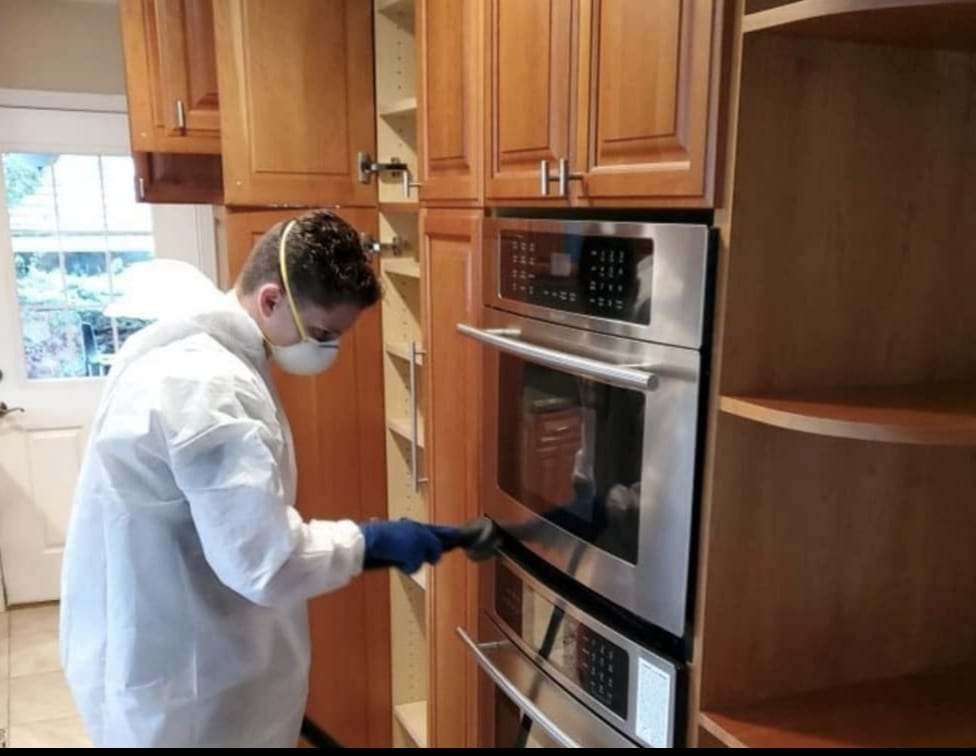
Some odors stay put: a closet where something spoiled, a basement storage room, a wall where a mouse died. Others spread. Cooking odors from strongly spiced dishes, smoke, and musty air from below can migrate through hallways and the HVAC system into every room, settling into carpet, drapes, and upholstery along the way.
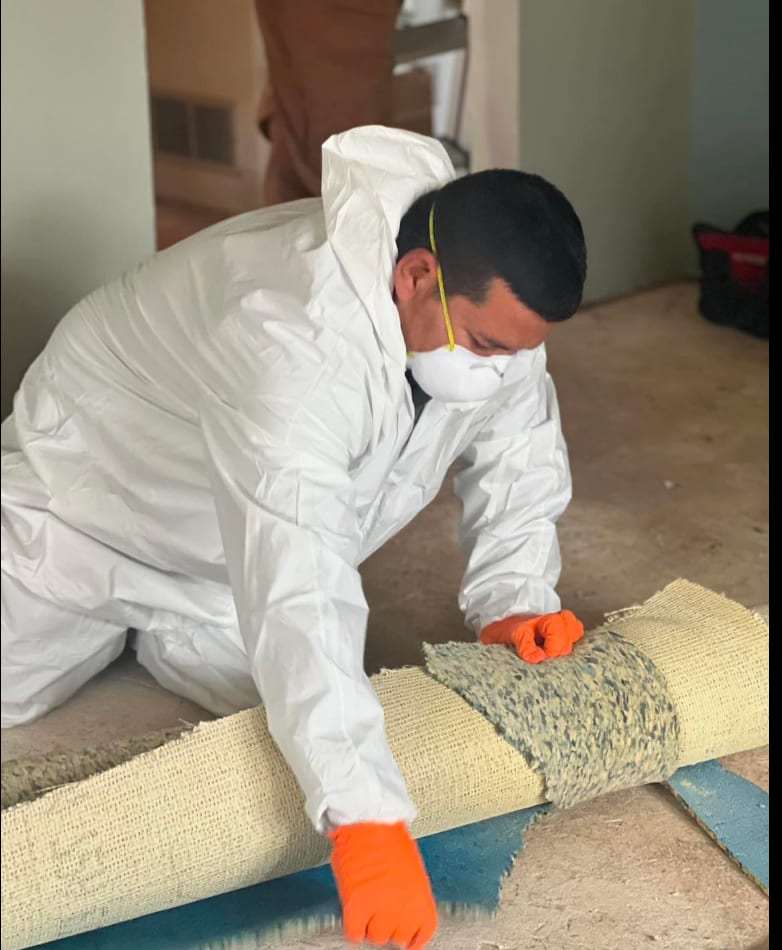
The treatment plan depends on which you're dealing with. A sound approach identifies the source and how far the odor has traveled, treats affected materials, and adds a whole-space treatment, including the HVAC system, only when odor has spread through the house.
Lowry occupies the site of the former Lowry Air Force Base, which closed in 1994. Since then it has been redeveloped into a planned neighborhood of single-family homes, townhomes, condominiums, and apartments, along with schools, parks, and adaptive reuse of historic base buildings. It straddles the Denver–Aurora line.
Because most homes in Lowry are relatively new and energy-efficient, they're well sealed, which keeps conditioned air in but can also hold odors. When a smell spreads in a tight house, the HVAC system is often part of the solution.
ZIP codes served: 80230 (Denver), 80220 (Denver), 80247 (Denver), 80010 (Aurora), 80246 (Denver).
Also nearby: 80224, 80207, 80206, 80012, 80231, 80045, 80222, 80209, 80238, 80218, 80205, 80210, 80203, 80266, 80014.
Years of flavorful cooking have left a strong spice smell in a townhome's cabinets, carpet, and upstairs bedrooms.
A guest bedroom over the garage smells stale and slightly musty, though the rest of the house is fine.
New owners of a Lowry single-family home notice a general stale odor throughout once furniture is in and windows are closed.
Frying, strong spices and fish leave grease-borne residue on cabinets, ceilings, the range hood and its filter, and in nearby fabrics. If the hood vents back into the room instead of outside, more of it stays. Cleaning the hood and filter is the first step; treating the residue on surfaces is what stops the smell returning every time the kitchen warms up.
The scope is set by how far the odor has spread.
| Step | What happens |
|---|---|
| 1. Identify the source | Find what's causing the odor and where it started. |
| 2. Map the spread | Check which rooms, materials, and air pathways now carry it. |
| 3. Recommend scope | Recommend a targeted room treatment or a whole-house treatment. |
| 4. Treat | Treat source materials and, where needed, perform whole-space treatment including the HVAC system. |
| 5. Evaluate | Review the results room by room. |
Guides and worksheets for Lowry homes and townhomes.
Each guide takes one household odor question and explains how to check it in the specific home.
These checklists are meant to be used, not just read.
These examples are explicitly illustrative, not records of real homes, people, inspections, or completed work.
These pages use neighborhood names as geographic orientation, not as evidence of housing age, construction, odor patterns, service territory, or provider availability.
Yes. Cooking odors settle into fabrics, cabinets, and the air system. Treating those materials and the HVAC removes the residue causing them.
That depends on how far the odor has spread. An assessment determines whether a targeted treatment will do or whether the whole house and HVAC need treatment.
Whole-house treatments typically require occupants to leave for a period. Room treatments may not. Ask for the timing before scheduling.
Ask what products will be used, whether they include ozone, bleach, or synthetic fragrance, and when it is safe to return after treatment.
Tightly built homes hold air longer, and new materials, stored items, or residual odors from construction or previous occupants can linger. Ventilation and source treatment help.
Yes. HVAC systems can circulate and hold odors. Whole-space treatment can include the air system.
Air moves. A forced-air system pulls air from one room and delivers it to all the others, and open stairways and hallways let odor drift. Once odor is in the ducts or has settled on surfaces throughout, treating just the original room isn't enough.
This form is not connected. This website is a draft preview: no business has been confirmed to receive requests, so the fields below are switched off and nothing can be sent. In an emergency, call 911.